
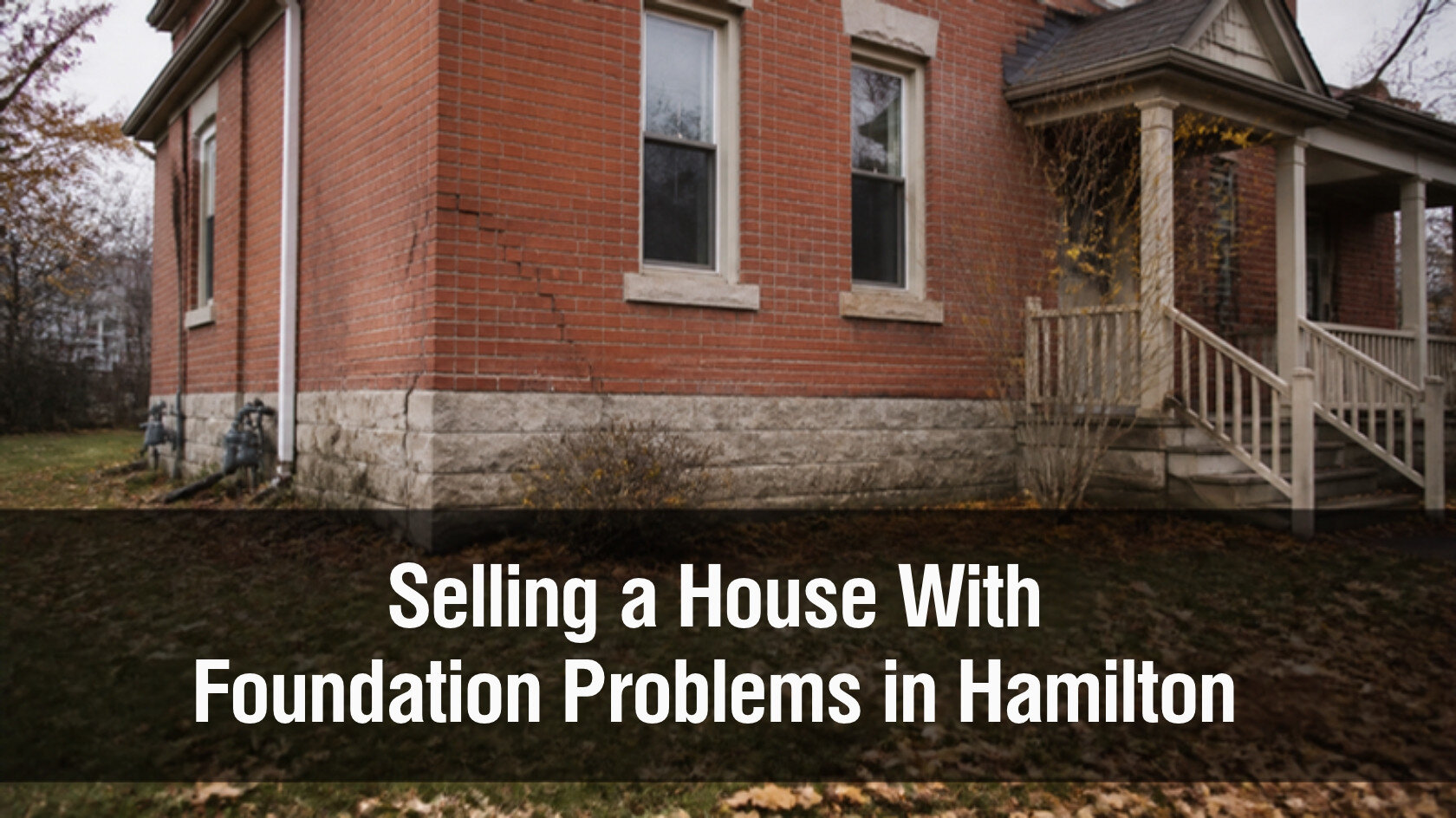
Quick answer: Yes, you can sell a Hamilton house with foundation problems, and Ontario law does not require you to repair it first. You can repair and list, list as-is and negotiate, or sell as-is to a cash buyer who does not depend on a mortgage, inspection condition or lender approval. You do need to be honest about known serious defects. In September 2026 the average Hamilton home sold for about $714,420 and took roughly 46 days to sell (Wowa), so a structural issue can lengthen a conventional sale.
When a Crack in the Foundation Becomes a Crack in Your Plans
Most homeowners find out about a foundation problem the same way: a hairline crack that seems to be a little longer than it was last spring, a basement door that suddenly sticks, a damp patch on the floor after heavy rain. For some people it is a minor repair. For others it is a five-figure question mark hanging over the biggest asset they own, and it arrives at the worst possible time, such as after a death in the family, during a separation, or when money is already tight.
If you own a house in Hamilton with foundation problems and you are thinking about selling, you are not stuck. You have more than one way forward, and the best one depends on how serious the problem is, how much time you have, and how much risk and effort you are willing to take on. This guide walks through what foundation issues mean for a sale in the current Hamilton market, what repairs can cost, what you have to tell buyers, and when selling as-is to a cash buyer makes sense.
What the Hamilton Market Looks Like Right Now
Any plan to sell starts with the market you are selling into, and it has shifted in buyers’ favour. According to a market update published by Wowa on October 9, 2026, the average sold price in the Hamilton region for September 2026 was about $714,420, which is roughly 7.9% lower than a year earlier. Homes were taking an average of about 46 days to sell, there were about 376 sales in the month, and the market held roughly 4.8 months of supply. The sales-to-new-listings ratio was reported at around 35%, down from about 45% in August.
In plain terms, buyers have choices. When inventory is healthy and sales are slower, buyers become more selective, and a house with a visible structural issue is one of the first things they cross off the list. A home that might have drawn multiple offers in a faster market can sit for weeks, pick up price reductions, and still fail to sell once the inspection report comes back.
Borrowing costs add another layer. On October 28, 2026, the Bank of Canada raised its overnight rate from 2.25% to 2.50%, the first increase since July 2023, according to Ratehub. Variable-rate mortgage holders feel that right away, while fixed rates move with bond yields rather than directly with the Bank’s decision. Either way, many buyers are watching their budgets closely, which leaves little room for a surprise repair bill. Industry commentary often points out that buyers financing a purchase are also less willing to take on a home their lender or insurer may question.
Common Foundation Problems in Older Hamilton Homes
Hamilton has a large stock of older houses, from century homes in the lower city and Westdale to mid-century bungalows on the Mountain and in the east end. Several features of the local housing stock tend to show up in foundation conversations:
- Older masonry and rubble foundations. Stone, brick and early block foundations can deteriorate at the mortar joints over decades, especially where water has been getting in.
- Water pressure and drainage. Poorly graded lots, failed weeping tile, downspouts that dump next to the house and high water tables all push moisture against basement walls.
- Freeze-thaw cycles. Water gets into a small crack, freezes, expands, and widens it. Southern Ontario winters repeat this cycle year after year.
- Settlement and soil movement. Some soils shrink and swell with moisture, and uneven settlement can show up as stair-step cracks in brick, sloping floors, or doors and windows that no longer close properly.
- Tree roots and changes to the lot. Large trees close to a foundation, or later additions and excavation nearby, can change how the ground supports the house.
Not every crack is a structural problem. Many hairline vertical cracks are simply the result of concrete curing and shrinking and are cosmetic or only a moisture concern. The ones that deserve attention are cracks that grow over time, run horizontally, form a stair-step pattern, or are accompanied by bowing walls or visible displacement.
Warning Signs That Call for a Professional Assessment
Published guidance from foundation and renovation sources generally lists a similar set of red flags that justify getting the home looked at promptly:
- Water entering the basement after heavy rain or snowmelt, leaving damp patches or standing water on the floor
- A white, powdery deposit on concrete or block, which can mean water is passing through the wall
- A persistent musty smell, which can point to moisture feeding mould behind finished walls
- A crack that lengthens or widens from one season to the next
- Freeze-thaw damage at existing cracks
- Doors and windows that stick, floors that slope, or gaps opening around trim
If you see several of these, a structural engineer or a reputable foundation contractor can tell you whether you are dealing with a moisture problem, a settlement problem, or both. That diagnosis matters, because the cost and the sales strategy are completely different for each.
What Foundation Repairs Can Cost
Costs vary widely with the cause, the access to the wall, and the contractor, so treat any number as a rough guide and get written quotes for your own house. Published Canadian estimates give a sense of the range. Interior polyurethane or epoxy injection to seal a single crack is commonly quoted in the range of about $500 to $1,500, while exterior excavation with a waterproofing membrane has been quoted at roughly $3,000 to $5,500 per crack, before any landscaping, driveway or deck restoration is added back in.
Those figures are for relatively contained repairs. Underpinning, wall replacement, pier systems and extensive drainage work cost considerably more, and those jobs often involve permits, engineering drawings and weeks of disruption. A repair that starts as one crack can expand once a contractor opens up the area and finds the underlying cause.
There is also the hidden cost of time. A repair project can take months from first quote to finished work, and that is before you list the home. If you are carrying a mortgage, paying property taxes and utilities on a house you no longer live in, or simply need the sale to close by a certain date, that delay is a real expense.
What You Have to Disclose When Selling in Ontario
Ontario is often described as a “buyer beware” province, but that does not mean a seller can stay silent about what they know. In general, sellers are expected to disclose known latent defects, meaning serious problems that are not visible on a reasonable inspection and that affect safety or the habitability of the home. A known foundation issue that you have had assessed, repaired in the past, or watched worsen is the kind of thing that can lead to disputes if it is hidden and discovered after closing.
A few practical points follow from that:
- Be accurate about what you know. Describing the problem as you understand it, and sharing any engineering reports or repair invoices, is usually safer than staying vague.
- Paperwork helps. Records of past repairs, warranties and permits give buyers confidence and protect you.
- Get legal advice for your specific situation. This article is general information, not legal advice. A real estate lawyer can explain your obligations and how to word an agreement of purchase and sale.
Disclosure also affects how buyers react. Once a conventional buyer’s home inspector flags the foundation, the buyer typically asks for a price reduction, a holdback, a repair credit, or walks away. That is where many traditional sales of homes with foundation problems fall apart.
Your Main Options for Selling a House With Foundation Problems
Option 1: Repair first, then list
If the problem is limited, you have the budget, and you are not in a hurry, fixing the issue and listing the home with documentation can widen your buyer pool and support a stronger price. The risks are cost overruns, the time involved, and the possibility that the sale price does not fully recover what you spent.
Option 2: List as-is on the open market
You can list the house with the issue disclosed and priced accordingly. Be ready for buyers to negotiate hard, for more conditional offers that fall through after inspection, and for longer time on market. In a market where the average home is already taking more than six weeks to sell, a house with a structural question mark can take noticeably longer. If it helps, our guide on how to sell a house that needs repairs in Hamilton covers how to price and position a home that is not move-in ready.
Option 3: Sell directly to a cash buyer
A direct cash sale means selling the house in its current condition to a buyer who is not relying on mortgage financing, a lender’s appraisal or a financing condition. You skip the repairs, the showings and the commission, and you can usually choose a closing date that fits your life, sometimes within a couple of weeks and sometimes later if you need time to move.
The trade-off is price. A cash buyer takes on the repair cost and the risk, so the offer will be lower than what a fully repaired home might fetch in a perfect sale. For many homeowners, though, the certainty of a firm offer and a predictable closing is worth more than a higher number that may never materialize.
Ready to sell your house fast in Hamilton?
Or call us directly: 647-800-4508
How Cash Buyers Evaluate a Home With Foundation Issues
If you are considering a direct sale, it helps to understand how an experienced buyer looks at a property like this. At Hamilton House Buyers, we generally focus on a few things:
- The cause of the problem. Drainage and moisture issues are very different from active settlement or a failing wall.
- The extent and the trend. A stable, old crack is treated differently from one that has moved recently.
- Access and scope of repair. Where the damage is, how the house is built, and what it takes to reach it all affect the cost.
- Related damage. Water, mould, or finishes that were damaged when the foundation leaked.
- Your timeline. The speed you need and the closing date you prefer shape how an offer is structured.
The same thinking applies to other kinds of damage. If water has already caused harm, our article on selling a flooded or water-damaged house in Hamilton explains how buyers assess those situations, and the guide to selling a fire-damaged or flood-damaged home goes into more detail on damaged properties generally.
Situations Where Selling As-Is Often Makes the Most Sense
Homeowners who choose a direct sale with foundation problems often fall into a handful of situations. An estate may have inherited a house that nobody wants to repair. A couple going through a separation may need to split the equity without waiting on contractors. An owner who is behind on payments may not have the cash for a repair, let alone a long listing period. Others are simply tired of the uncertainty and want a firm number and a closing date.
In each of these cases, the value of a cash sale is not only the money. It is the end of the open-ended problem: no more quotes, no more showings that fall apart after inspection, and no more carrying costs while the house sits on the market.
Steps to Take Before You Decide
- Document the problem. Take dated photos, and measure and mark cracks so you can tell whether they are moving.
- Get one professional opinion. A structural engineer or an established foundation contractor can tell you what you are dealing with. An independent engineer has no repair job to sell you.
- Collect existing paperwork. Gather past inspection reports, repair invoices, permits and warranties.
- Compare your realistic options. Weigh a repair-and-list timeline and cost against an as-is listing and against a cash offer.
- Talk to a lawyer. Confirm your disclosure obligations and how any sale agreement should be written.
- Check your insurance. Ask your insurer how they view the issue, since some insurers apply conditions or exclusions to homes with known foundation or water problems.
Frequently Asked Questions
Can I sell a house in Hamilton with a cracked foundation?
Yes. Many homes with foundation cracks sell every year. How difficult it is depends on how serious the cracks are, whether you disclose and document them, and which sales route you choose. Conventional buyers often struggle with the financing and inspection process, while cash buyers can purchase the home as it stands.
Do I have to repair the foundation before I sell?
No. Ontario law does not require repairs before a sale. What you do need to do is avoid concealing known latent defects. You can sell as-is as long as you are honest about what you know.
How much will a foundation problem lower my sale price?
There is no single number. Buyers generally discount for the estimated repair cost plus the risk and hassle. Minor moisture-related crack repairs are commonly quoted in the hundreds to low thousands of dollars, while major structural work costs much more. A written quote or engineer’s report gives you a more concrete basis for negotiation.
Will a bank give a mortgage on a house with foundation issues?
It depends on the lender and the severity. Lenders rely on appraisals and inspections, and a serious structural concern can stop a buyer’s financing or insurance approval. That is one reason homes with foundation issues are often easier to sell to a buyer who is not depending on a mortgage.
How fast can I sell a house with foundation damage for cash?
Once a cash buyer has reviewed the property and you accept an offer, closings can happen in as little as a couple of weeks, or on a later date that suits you. The exact timeline depends on lawyers, title searches and your preferences.
Should I get an engineer’s report before talking to a cash buyer?
It is not required. If you already have a report, sharing it helps the buyer assess the home more accurately. If you do not, an experienced buyer can still evaluate the house and make an offer based on a visit.
Do cash buyers charge fees or commissions?
With a direct sale to a cash buyer there is no realtor commission on the sale. You should still budget for your own legal costs and any payout on your mortgage, and you should ask any buyer to put all terms in writing.
Final Thoughts
A foundation problem can make selling feel overwhelming, especially in a Hamilton market where buyers are choosy, homes are taking longer to sell, and borrowing costs have just moved up again. But the problem has a limited number of answers. You can repair and list, list as-is and accept a tougher negotiation, or sell directly to a buyer who will take the house as it is.
The right choice depends on your timeline, your finances and how much uncertainty you can live with. Whatever you choose, get the facts about the problem, be honest about what you know, and compare real numbers rather than guesses. If a quick, certain sale without repairs is what you need, we are happy to take a look at your house and give you a no-pressure cash offer.
Ready to talk? Call 647-800-4508 or fill out the form below, and we will get back to you with a no-pressure cash offer for your Hamilton, Ontario home.