
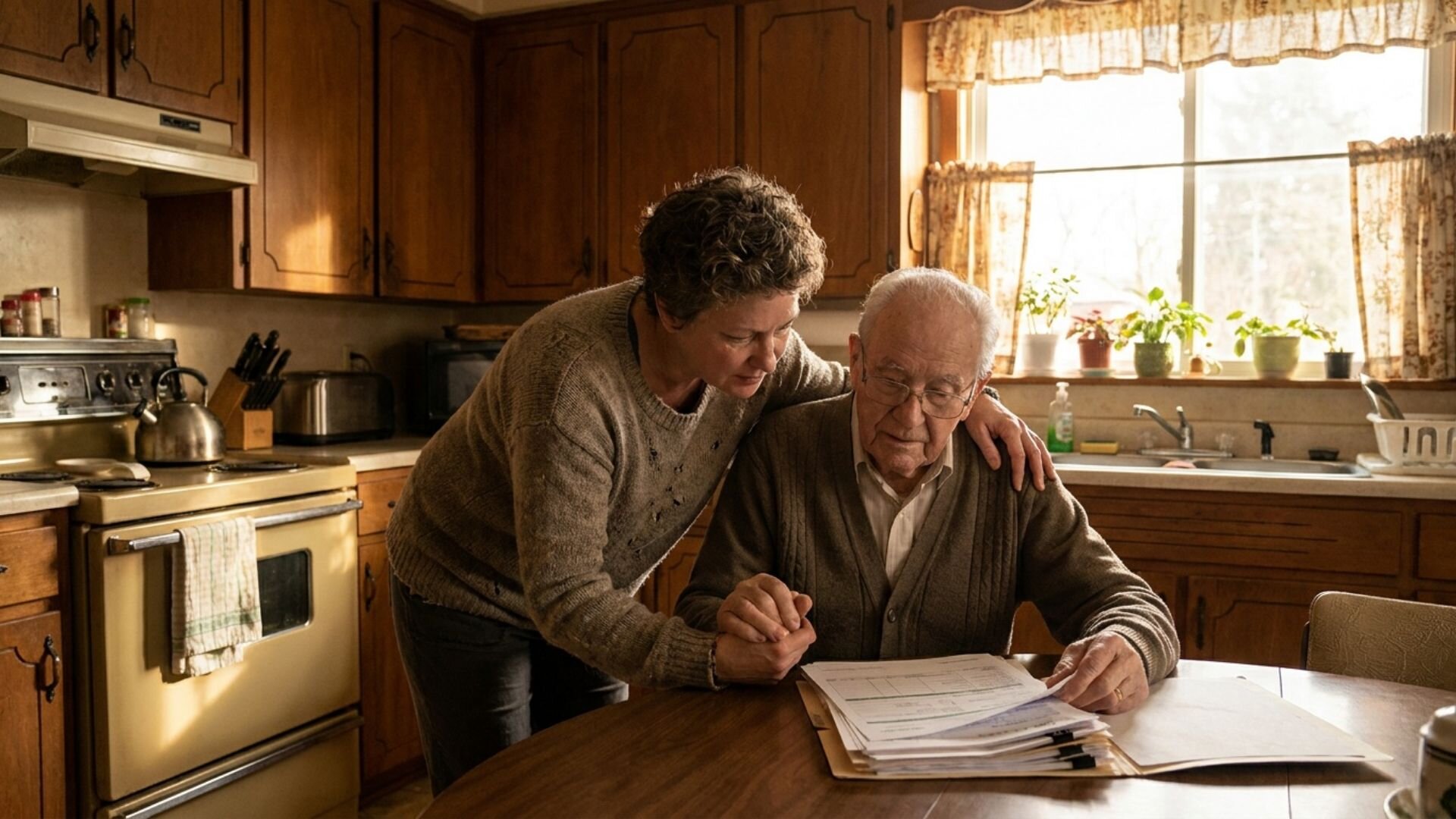
When a Loved One Needs Long-Term Care, Selling Their Hamilton Home Doesn’t Have to Add to the Stress
The phone call nobody is ever prepared for. Your mom has had a fall on the back porch of her Concession Street bungalow and the doctors are saying she can’t live alone anymore. Or your dad’s dementia has progressed to the point where the family home on Upper Wentworth is no longer safe for him. Suddenly, on top of the emotional weight of watching a parent decline, you’re faced with one of the most complicated financial decisions of your life: what do you do with the house?
I’m Cassie, and here at Hamilton House Buyers I’ve sat across from dozens of Hamilton families navigating this exact situation. Sometimes it’s a son who lives in Calgary trying to coordinate a sale remotely. Sometimes it’s a daughter who lives five minutes away in Stoney Creek but is already stretched thin between her own kids, her job, and driving her father to appointments at St. Joseph’s Healthcare three times a week. Every story is different. The grief, the exhaustion, and the urgency — those parts are always the same.
This guide is written for you. Whether you’re the primary caregiver, the person who just got Power of Attorney, or a sibling trying to navigate this with your family, I want to walk you through everything you need to know about selling a Hamilton home when a loved one transitions to long-term care.
Why the Family Home Often Has to Be Sold
Long-term care in Ontario is expensive. As of 2026, a basic long-term care (LTC) bed in Hamilton can cost anywhere from $1,900 to $3,200+ per month depending on the level of care and room type. Hamilton has several well-regarded long-term care facilities, including Wentworth Lodge on Main Street West, Macassa Lodge on Magnolia Drive, and the Village of Wentworth Heights in the East Mountain. The wait times for publicly-funded beds often stretch from six months to over two years. During that wait, many families are paying out of pocket for PSW (Personal Support Worker) services, often in the range of $25–$40 per hour.
The family home — often the largest asset a senior owns — becomes the logical way to fund that care. But selling that home comes with a host of complications that most families haven’t dealt with before.
The Legal Side First: Who Has the Authority to Sell?
Before anything else, you need to establish who has the legal authority to make decisions about the property.
If your loved one has capacity: They can still make their own decisions. The home is theirs to sell, and they need to be involved in and consent to every step.
If your loved one has a Power of Attorney (POA) for Property: The person named as Attorney under the POA can make property decisions on their behalf. In Ontario, most continuing POAs for Property take effect immediately upon signing, but some require certification of incapacity from a physician.
If your loved one has no POA and lacks capacity: You may need to apply to the Ontario courts for a guardianship order through the Office of the Public Guardian and Trustee (OPGT). Speak with an estates lawyer in Hamilton as soon as possible — firms like Scarfone Hawkins or Sullivan Mahoney regularly handle these matters.
Sort out the legal authority first, before you do anything else. We’ve seen sales fall apart at the eleventh hour because the right documentation wasn’t in place.
The Emotional Dimension of Selling a Parent’s Home
Selling a parent’s home is emotionally devastating for many families, even when it’s clearly the right decision. That house on East 23rd Street or Barton Street East isn’t just a property. It’s the house where kids grew up, the kitchen where your mom made Sunday dinners, the garden your father tended for thirty years. Some families find it helpful to do a final family gathering in the home before it sells. If the weight of it all is affecting your ability to make decisions, it may be worth speaking with a social worker at Hamilton Health Sciences or the Alzheimer Society of Hamilton Halton.
The Practical Challenges of Selling an Occupied or Transitioned Property
The House Is Full of Belongings
Your parent’s home has likely accumulated 30, 40, maybe 50 years of belongings. Clearing it out before a sale is an enormous undertaking. Many families in Hamilton turn to estate sale companies to help liquidate furniture and household items. When selling to a cash buyer like Hamilton House Buyers, you can leave everything behind — we deal with it so you don’t have to.
The Property May Need Repairs
Many long-term Hamilton homes have deferred maintenance — leaky roofs, water in the basement, outdated electrical, kitchens and bathrooms that haven’t been updated since the 1980s. If this resonates with you, take a look at our guide on selling your Hamilton home when health issues are driving the decision.
The Home May Be Vacant
Once your loved one moves into care, the home sits empty. An empty Hamilton home in winter is a liability: burst pipes, heating failures, and insurance complications. Standard policies void coverage if a home is vacant for 30+ days without notification. Make sure you contact the insurer immediately.
Distance and Time Constraints
Many adult children managing a parent’s property sale don’t live in Hamilton. Managing a traditional listing from a distance is exhausting. We regularly work with families where the decision-maker is coordinating everything by phone from another city.
Ready to sell your house fast in Hamilton?
Or call us directly: 647-800-4508
Your Options for Selling the Home
Option 1: Traditional Listing with a Realtor
The traditional route involves hiring a realtor, staging the home, listing on MLS, managing showings, negotiating offers, and closing — typically 60 to 90 days from listing. Advantages: Potentially the highest sale price if the home is in good condition. Disadvantages: Weeks or months of preparation, 4–5% commissions, uncertain timelines.
Option 2: Sell to a Cash Buyer
A cash buyer like Hamilton House Buyers purchases the home directly, as-is, without conditions or repairs, and closes on your timeline — sometimes in as little as two weeks. Advantages: Speed, certainty, and simplicity. No cleaning, no repairs, no staging. Honest caveat: You will likely receive somewhat less than on the open market. For many families in a care transition, this tradeoff is absolutely worth it.
Option 3: Rent the Property
Some families consider renting to generate care income. However, becoming an accidental landlord in a stressful situation is harder than it sounds. Most families in acute care transitions choose a clean sale.
Understanding the Financial Picture
The Attorney under the POA has a fiduciary duty to use proceeds for the person’s benefit — specifically, their care costs. If your loved one qualifies for government-subsidized LTC in Ontario, they pay a co-payment based on income. If this was your loved one’s principal residence, the sale is generally exempt from capital gains tax in Canada. Speak with an accountant familiar with the Canadian principal residence exemption.
When There Are Siblings Involved
One of the most common complications is family disagreement. These dynamics can delay decisions for months or years while the property sits vacant and care costs mount. If you find yourself in this situation, our post on what to do when you inherit a home in Hamilton and don’t want to keep it covers family decision-making dynamics that often come up.
What the Timeline Typically Looks Like
Week 1: We visit the property within 24–48 hours, discuss your timeline and situation, and provide a written cash offer — no obligation, no pressure.
Week 2–3: We sign a purchase agreement. Our lawyer and yours coordinate the paperwork. You begin handling personal belongings.
Week 3–4: Closing. You receive the proceeds and walk away without having managed a single showing, repair quote, or home inspection. We’ve closed in as little as 10 days in acute situations.
A Note on Guilt
Guilt about moving a parent into care. Guilt about selling the family home. Guilt about needing to make a financial decision during a time of grief. What you’re carrying is heavy. Choosing to sell a home to fund your loved one’s care isn’t abandonment — it’s often the most loving, responsible act a family can take. Many families who’ve worked with us have also navigated the grief of selling the family home after losing a spouse in Hamilton — if that’s also part of your story, that guide may be helpful.
Frequently Asked Questions
Can I sell a parent’s home in Hamilton if I have Power of Attorney?
Yes. A valid continuing Power of Attorney for Property gives you the legal authority to sell the property on your parent’s behalf. You will need to provide the POA document to the lawyer handling the transaction.
Do I need to go to court to sell the home if my parent has dementia?
Not necessarily. If a valid POA is in place and your parent executed it while they still had capacity, you can act on their behalf without going to court. If there is no POA, you may need to apply through the Ontario Office of the Public Guardian and Trustee.
Will selling the family home affect my parent’s eligibility for subsidized long-term care?
In Ontario, long-term care co-payments are income-tested, not asset-tested. The proceeds may affect the level of co-payment required. Speak with a financial advisor who specializes in eldercare planning.
The house hasn’t been updated since the 1970s. Can we still sell it quickly?
Absolutely. We buy homes in any condition — no repairs, updates, or cleaning required. The condition of the property is factored into our offer, not used as a reason to decline.
What happens to the furniture and belongings inside the house?
When you sell to Hamilton House Buyers, you take what you want and leave the rest. We handle the contents of the home after closing.
How quickly can we actually close if we need the funds for care right away?
In urgent situations, we’ve closed in as little as 10 days. If you have a clear title and the legal authority to sell is established, we can move very quickly. Call us and explain your timeline.
What if my siblings disagree about selling the house?
If you hold POA for Property, you have the legal authority to proceed even if siblings disagree — though we always encourage family consensus where possible. The key is not to let disagreement delay necessary care funding indefinitely.
Final Thoughts: Selling the House Is an Act of Love
If you’re reading this, you’re probably in the thick of one of the hardest seasons a family can face — watching someone you love lose their independence, trying to make the right decisions under pressure, and carrying more than your share of the weight. Whatever you’re feeling right now is valid.
Selling a parent’s Hamilton home to fund their care is not a failure. It’s often the most practical, loving thing you can do to ensure they receive the support and dignity they deserve for the rest of their life. And you don’t have to navigate it alone or make it harder than it has to be.
When you’re ready to talk — no pressure, no obligation, just an honest conversation — we’re here.
Hamilton House Buyers 📞 647-800-4508
No pressure. No obligation. Just honest answers.