
The Buried Problem Nobody Tells You About Until You Try to Sell
A few months ago I sat at a kitchen table on Britannia Avenue with a homeowner named Doug. He’d lived in his house for almost thirty years, raised two kids there, and finally decided it was time to downsize. His agent had a buyer lined up within a week of listing — a great sign, or so he thought. Then the home inspection came back, and the buyer’s lawyer found a line item in the old insurance file: “oil heat, tank location unconfirmed.” The financing fell through two days later. The buyer’s lender wouldn’t touch the property without proof the old underground oil tank had been properly decommissioned or removed, and nobody — not Doug, not the previous owner, not the city — had any record of it.
If you own an older home in Hamilton — especially in neighbourhoods like Crown Point, Homeside, Confederation, Rosedale, Normanhurst, Gibson, or Corktown, where a huge share of the housing stock was built between the 1920s and the 1960s — there is a real chance your property was heated with oil at some point, and a real chance that tank is still in the ground. I’ve now worked with several Hamilton sellers who ran into this exact wall, and I want to walk you through what’s actually going on, because it’s one of the most common — and most misunderstood — reasons a “normal” home sale suddenly turns into a distressed one.
Why Underground Oil Tanks Are Such a Big Deal in Hamilton
Before natural gas lines reached every corner of the city, oil furnaces were the standard way to heat a home in Hamilton. Streets in the East End and on the Mountain are full of houses built in that era, many of which switched to gas heating decades ago but never removed the old fuel tank buried in the backyard or under the driveway. Over time, steel tanks corrode. A rusted-through tank can leak diesel-grade fuel oil into the surrounding soil and, in the worst cases, into groundwater — and that’s an environmental and financial liability that follows the property, not the person who owned it when the leak happened.
This isn’t a rare, one-off issue. The Technical Standards and Safety Authority (TSSA) has run public awareness campaigns for years specifically about legacy oil tanks in Ontario homes, because insurers started tightening their rules after seeing a wave of contamination claims. Today, most home insurance companies in Ontario will refuse to insure — or will charge a steep premium for — any home with a known or suspected underground oil tank that hasn’t been professionally removed and certified clean. And if a buyer can’t get insurance, their lender won’t fund the mortgage. That’s the domino effect that torpedoed Doug’s sale.
How You Even Find Out You Have One
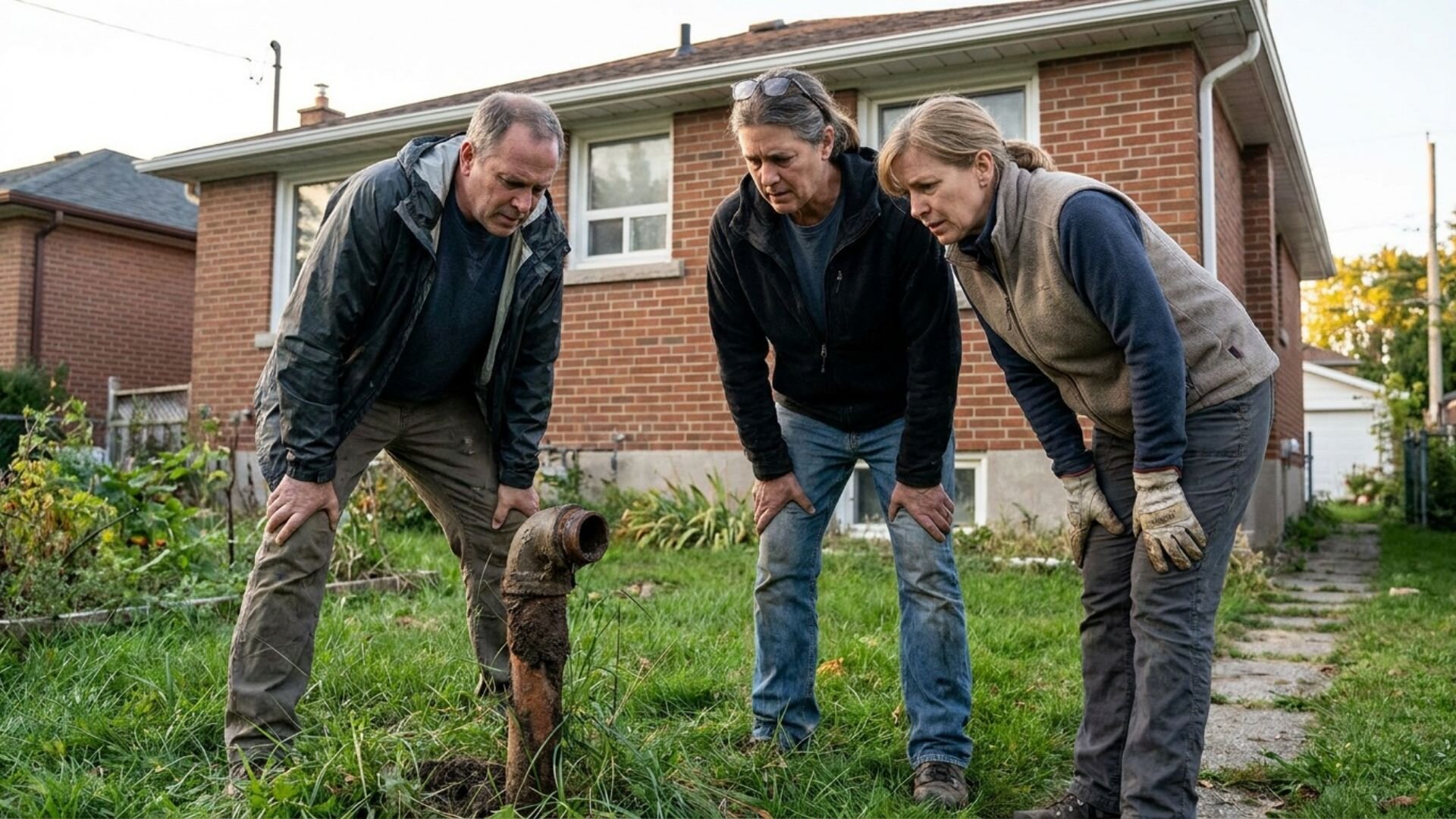
Most sellers discover this in one of three ways: an old furnace vent pipe capped off in the basement wall that leads nowhere obvious, a fill pipe or vent cap sticking a few inches out of the lawn (sometimes mistaken for a sprinkler part or an old post), or — most often — a line buried in decades-old insurance paperwork or a property disclosure statement from when they bought the house. I’ve had sellers on Kenilworth Avenue North and near Ottawa Street who had no idea until a home inspector during a previous, failed sale attempt pointed out the tell-tale capped pipe by the foundation.
If you’re not sure, a few things are worth checking before you list: old furnace inspection stickers in the basement (some technicians used to note “converted from oil” on the equipment), your fire insurance binder if you kept the original paperwork from the purchase, and simply walking the perimeter of the house looking for a metal cap or pipe protruding a few inches from the ground, usually near where the basement wall meets the yard.
What It Actually Costs to Fix — And Why Many Sellers Just Want Out
If a tank is confirmed still in the ground, a licensed contractor has to excavate it, remove it, and — if there’s any sign of a leak — test and potentially remediate the surrounding soil. A straightforward removal with a clean tank can run several thousand dollars. If there’s contamination, remediation costs can climb into the tens of thousands, and there’s no way to know which scenario you’re in until the tank is actually out of the ground. That uncertainty is exactly what scares off traditional buyers and their lenders — nobody wants to sign a mortgage commitment on a property where an unknown five-figure environmental bill might be sitting six feet under the tomato patch.
Some sellers, understandably, don’t have the cash on hand to gamble on that outcome, especially on top of realtor commissions, legal fees, and the stress of trying to keep a sale together through financing conditions. That’s a big part of why homes with legacy oil tanks so often end up selling to a cash buyer instead of going through a traditional listing.
Ready to sell your house fast in Hamilton?
Or call us directly: 647-800-4508
Why a Cash Sale Solves the Oil Tank Problem
When we buy a house at Hamilton House Buyers, we’re not relying on a bank to approve a mortgage, and we’re not asking an insurance company to sign off on the property before closing. That’s the whole difference. We can buy your home exactly as it sits — tank in the ground, disclosed and unresolved — because we’re not financing the purchase the way a traditional buyer would. You don’t need to pay for excavation, testing, or remediation before closing. You don’t need to wait weeks for a specialty environmental inspection. You don’t need to disclose it to five different mortgage brokers and watch each one back away.
This is very similar to what we see with houses that have unpermitted work or renovations — the underlying issue isn’t that the house is worthless, it’s that traditional financing is allergic to uncertainty. A cash sale removes that uncertainty from the equation entirely.
What Doug Did Next
After his financing fell through, Doug called us. We walked the property together, he showed us the old vent pipe by the side door, and within two days we had a cash offer on the table that accounted for the tank as-is — no removal required on his end, no soil testing, no more waiting on a lender’s environmental department. He closed three and a half weeks later and told me afterward that the hardest part wasn’t the tank itself, it was the not knowing — not knowing what it would cost, not knowing how long remediation might take, not knowing if his sale would fall through a second time. Taking that uncertainty off his plate was the whole value of working with us.
You Have More Options Than You Think
To be clear, selling to a cash buyer isn’t the only path if you have a legacy oil tank. You can hire a licensed removal contractor, get a clean soil test, and then list traditionally — plenty of Hamilton homeowners do exactly that, especially if they have the time and the cash reserve to absorb an unpredictable remediation bill. You could also try to sell with full disclosure and a price adjustment, though in our experience most conventional buyers and their lenders simply won’t move forward until the tank issue is fully resolved, which can leave a listing sitting for months. If your home also needs other work on top of the tank issue, it’s worth reading our guide on selling a house that needs repairs in Hamilton, since a lot of the same financing obstacles apply.
What doesn’t make sense, in my experience, is spending money on remediation before you even know what you’re dealing with, especially if you’re already feeling the financial pinch of holding two mortgage payments, a probate deadline, or simply wanting to move on. That’s where a straightforward cash home sale without repairs or commissions tends to make the most sense.
What the Timeline Actually Looks Like
When a seller calls us about a suspected or confirmed oil tank, the process usually moves faster than people expect. We’ll typically arrange to see the property within a day or two, take a look at the vent pipe or fill cap location if there is one, and ask a few questions about the home’s heating history — when it was converted to gas, whether any paperwork exists, and whether a previous owner ever mentioned it. From there we can usually put together a cash offer within 24 to 48 hours. Because there’s no bank underwriting, no appraisal contingent on environmental sign-off, and no insurance binder to chase down, closing can happen in as little as two to three weeks if that’s what works for your schedule — or longer if you need more time to coordinate a move. Either way, you’re not the one waiting on a lender’s environmental department to make up its mind.
It’s also worth saying plainly: disclosure matters no matter who you sell to. We’d always rather know about a suspected tank upfront so we can account for it properly in our offer, the same way we’d want to know about a foundation crack or knob-and-tube wiring. Being straightforward about it protects you legally and lets us move quickly instead of getting bogged down later.
Frequently Asked Questions
How do I know if my Hamilton home ever had an oil tank?
Look for a capped metal pipe sticking a few inches out of the ground near the foundation, an old fill pipe near the driveway, or a furnace vent that seems to lead nowhere. Older insurance paperwork and past home inspection reports are also good sources — many will explicitly note “oil heat” or “tank present” even if the furnace itself was replaced decades ago.
Is it illegal to leave an old oil tank in the ground in Ontario?
There’s no blanket law requiring immediate removal of an inactive tank, but insurers and lenders have become far stricter, and undisclosed tanks can create serious liability if a leak is later discovered. Full disclosure to any buyer is essential, and most municipalities and fire codes have rules around abandoned tanks that a contractor can walk you through.
Will my home insurance cover a tank leak that happened years ago?
Usually not, and this is exactly why insurers are so cautious. Many policies specifically exclude environmental contamination from underground storage tanks, which is part of why a new buyer’s insurer may refuse coverage until the tank is professionally removed and the soil is tested.
How much does it cost to remove an underground oil tank in Hamilton?
A clean removal with no contamination typically runs a few thousand dollars. If soil testing reveals contamination, remediation costs can run much higher, and there’s no reliable way to estimate the final number until the tank is actually excavated.
Can I sell my house “as-is” with the tank still in the ground?
Yes, with full disclosure — but most traditional buyers using mortgage financing will have a very hard time closing until the tank issue is resolved. Cash buyers, like us, can purchase the property as-is without requiring removal or remediation first.
Do I need a special inspection before selling if I suspect a tank?
If you’re planning to sell traditionally, yes — a tank sweep or environmental assessment is usually required by the buyer’s lender at some point in the process regardless of when you disclose it. If you’re selling for cash, that step becomes the buyer’s responsibility instead of yours.
What neighbourhoods in Hamilton are most likely to have older oil tanks?
Older, established areas with housing stock from the early-to-mid 1900s see this most often — parts of the East End, Crown Point, Homeside, Confederation, Rosedale, Gibson, Landsdale, and Corktown, along with older streets on the Mountain. If your home was built before the 1970s and originally had a furnace room with an oil-fired unit, it’s worth checking.
Final Thoughts: You Don’t Have to Solve This Before You Sell
Finding out your home has a legacy oil tank feels like a gut punch, especially if you’re already juggling a move, a family situation, or a sale that just fell apart through no fault of your own. It doesn’t mean your house is unsellable, and it doesn’t mean you’re on the hook for a costly cleanup before anyone will make you an offer.
If you’d rather skip the uncertainty of testing, remediation costs, and financing delays, let’s just talk about where things stand — there’s no obligation, and no pressure to decide anything on the spot.
Hamilton House Buyers 📞 647-800-4508
No pressure. No obligation. Just honest answers.